Korthdirect Mortgage Inc.

Full redesign of a B2B platform for mortgage investors in the United States · 2024
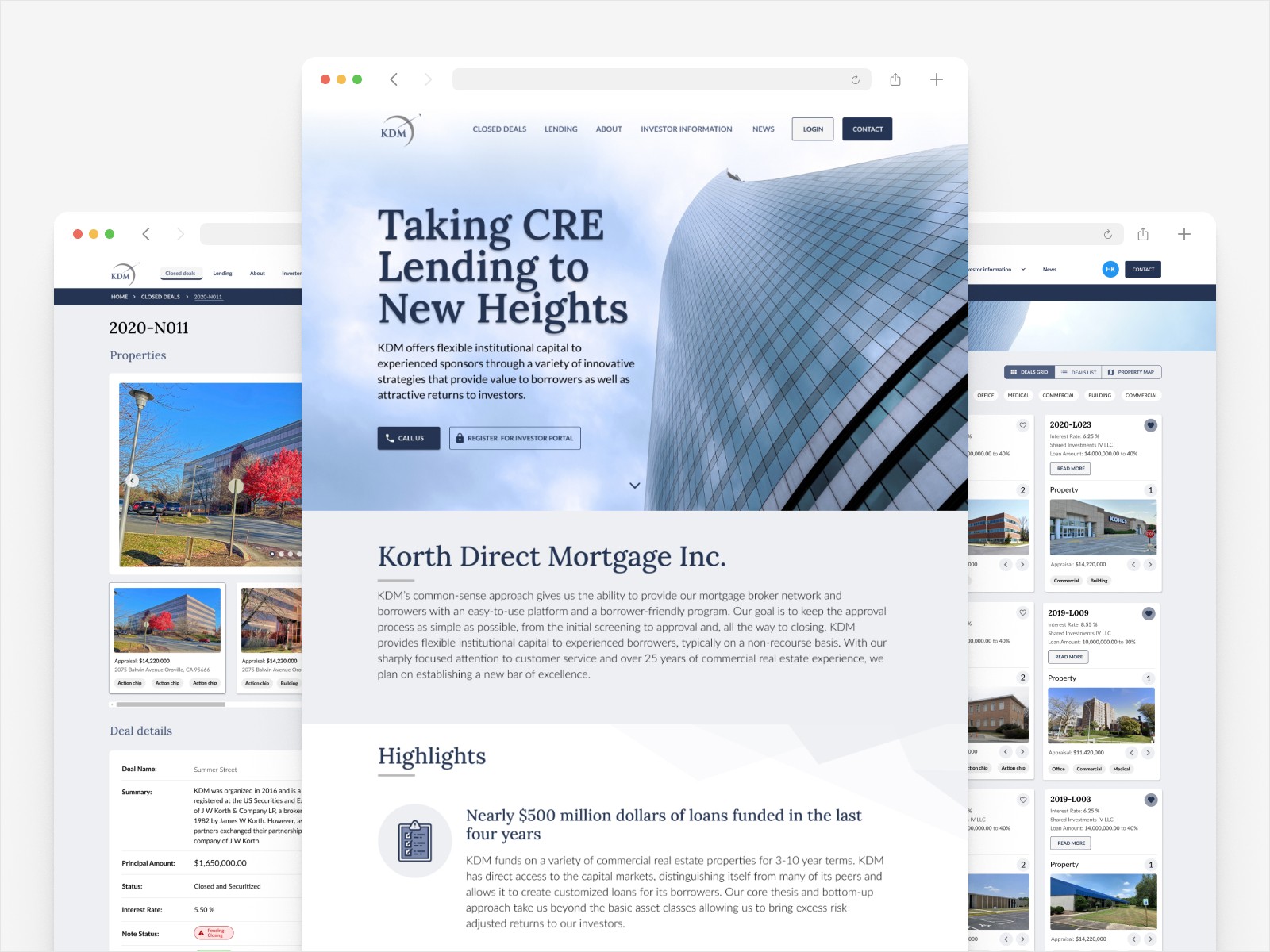
~100

Active investors on the platform

9 months

Project duration

3 flows

Critical flows redesigned after usability testing

+30%

Sales growth target defined with the client

My role in the project

UX Research
Information Architecture
Wireframing & Prototyping
Usability Testing
UI Design

I was the sole UX/UI designer on the project, owning the entire process from research through final design delivery. I worked within a three-person team alongside a frontend and a backend developer. Every design and user experience decision was mine.

The Problem

KDM Financial is a mid-market commercial mortgage lender providing financing for US commercial real estate, including multi-family, office, industrial, and self-storage properties.

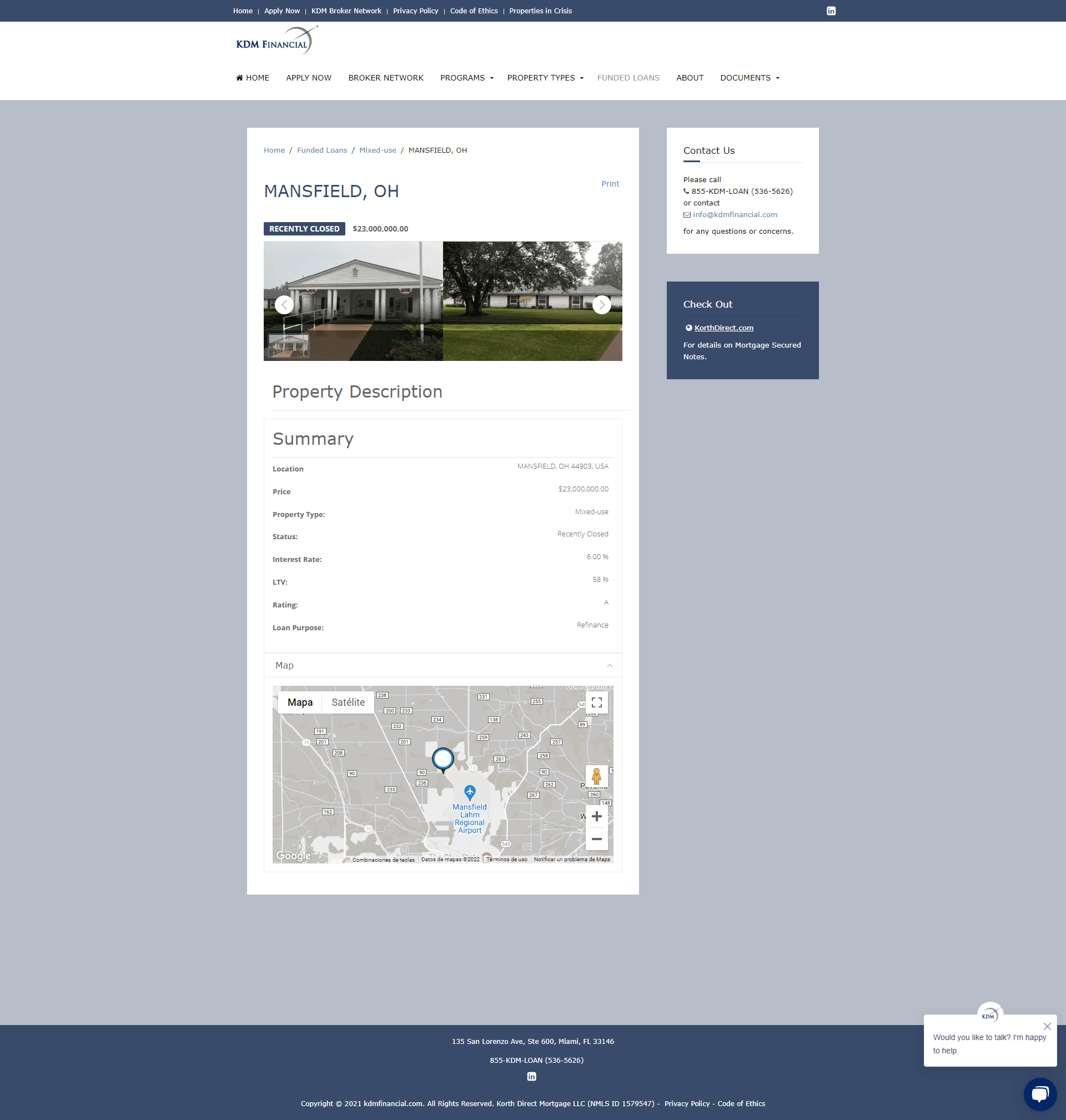
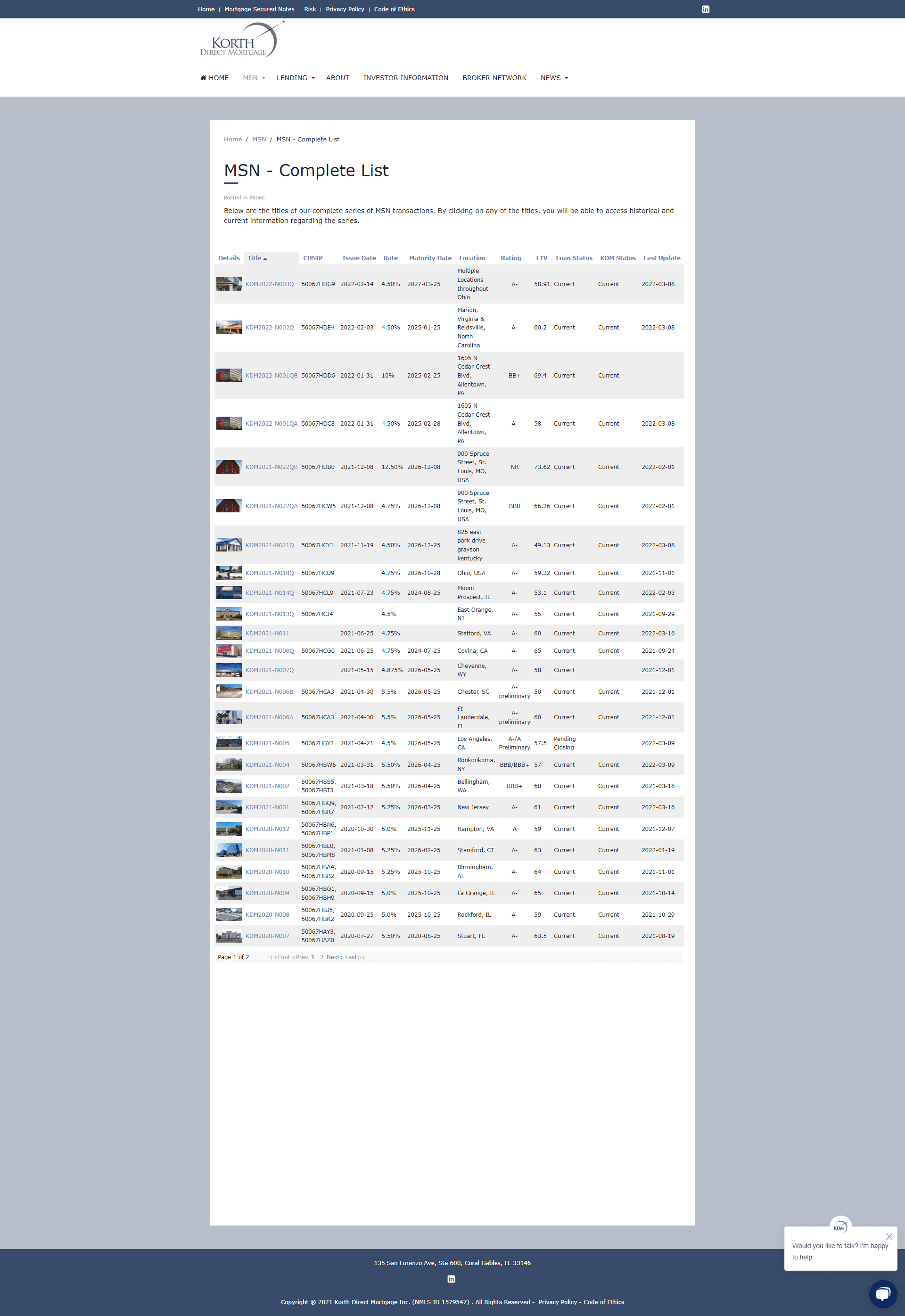
The existing platform featured an outdated, cluttered interface that hindered the daily workflow of ~100 external investors. Confusing navigation, a lack of information hierarchy, and high-friction flows for login, registration, and property management stalled productivity. The business required a complete redesign to remain competitive and scale effectively.

"Investors lose track of their current status and progress. We want to increase sales by 30% and ensure investors achieve their goals as quickly and easily as possible."

— Client brief · KDM Financial

Design Process

01.

Empathize: Understanding the Context

I conducted a competitive audit to identify where KDM was losing ground to competitors offering integrated financial services. I supplemented this with a contextual analysis focused on the environmental and psychological factors of the users: older investors with limited time and varying levels of tech literacy. I defined four research hypotheses that guided all subsequent design decisions.

01.

Empathize: Understanding the Context

I conducted a competitive audit to identify where KDM was losing ground to competitors offering integrated financial services. I supplemented this with a contextual analysis focused on the environmental and psychological factors of the users: older investors with limited time and varying levels of tech literacy. I defined four research hypotheses that guided all subsequent design decisions.

Competitive analysis
Context analysis
Research hypotheses

02.

Define: Aligning Problems and Goals

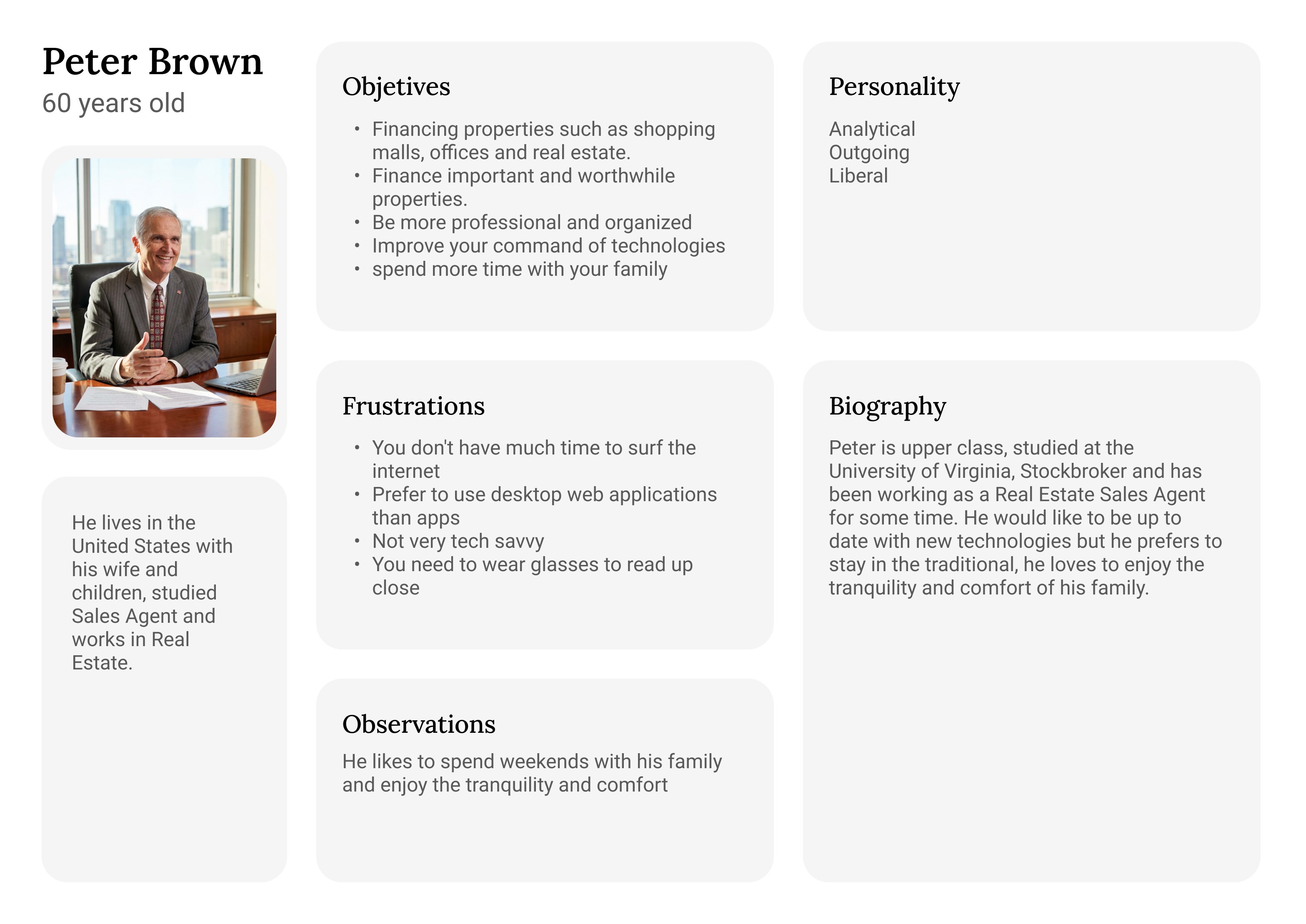
I developed a formal project brief with stakeholders to align on scope, legal constraints, and business goals. I then formulated a POV (Point of View) statement to reframe pain points as actionable opportunities. Finally, I designed a User Persona representing our primary user group: senior-level investors who require streamlined processes and clear oversight of their property statuses.

02.

Define: Aligning Problems and Goals

I developed a formal project brief with stakeholders to align on scope, legal constraints, and business goals. I then formulated a POV (Point of View) statement to reframe pain points as actionable opportunities. Finally, I designed a User Persona representing our primary user group: senior-level investors who require streamlined processes and clear oversight of their property statuses.

Brief
POV
User person
User person

03.

Ideate: Generating Solutions

I used the "How Might We" technique to reframe pain points as design opportunities, generating open-ended questions to drive solution exploration. I supported this ideation with a SWOT analysis to capitalize on the platform's strengths while mitigating the risks identified during the research phase.

03.

Ideate: Generating Solutions

I used the "How Might We" technique to reframe pain points as design opportunities, generating open-ended questions to drive solution exploration. I supported this ideation with a SWOT analysis to capitalize on the platform's strengths while mitigating the risks identified during the research phase.

HMW
FODA / SWOT
Structured Ideation

04.

Prototype: Structure Before Aesthetics

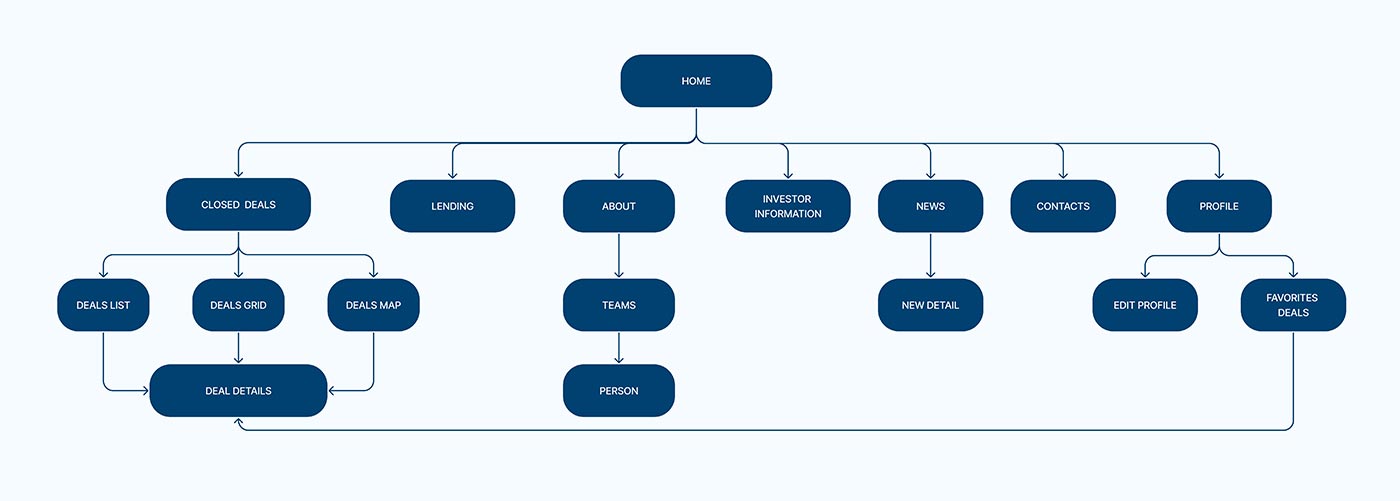
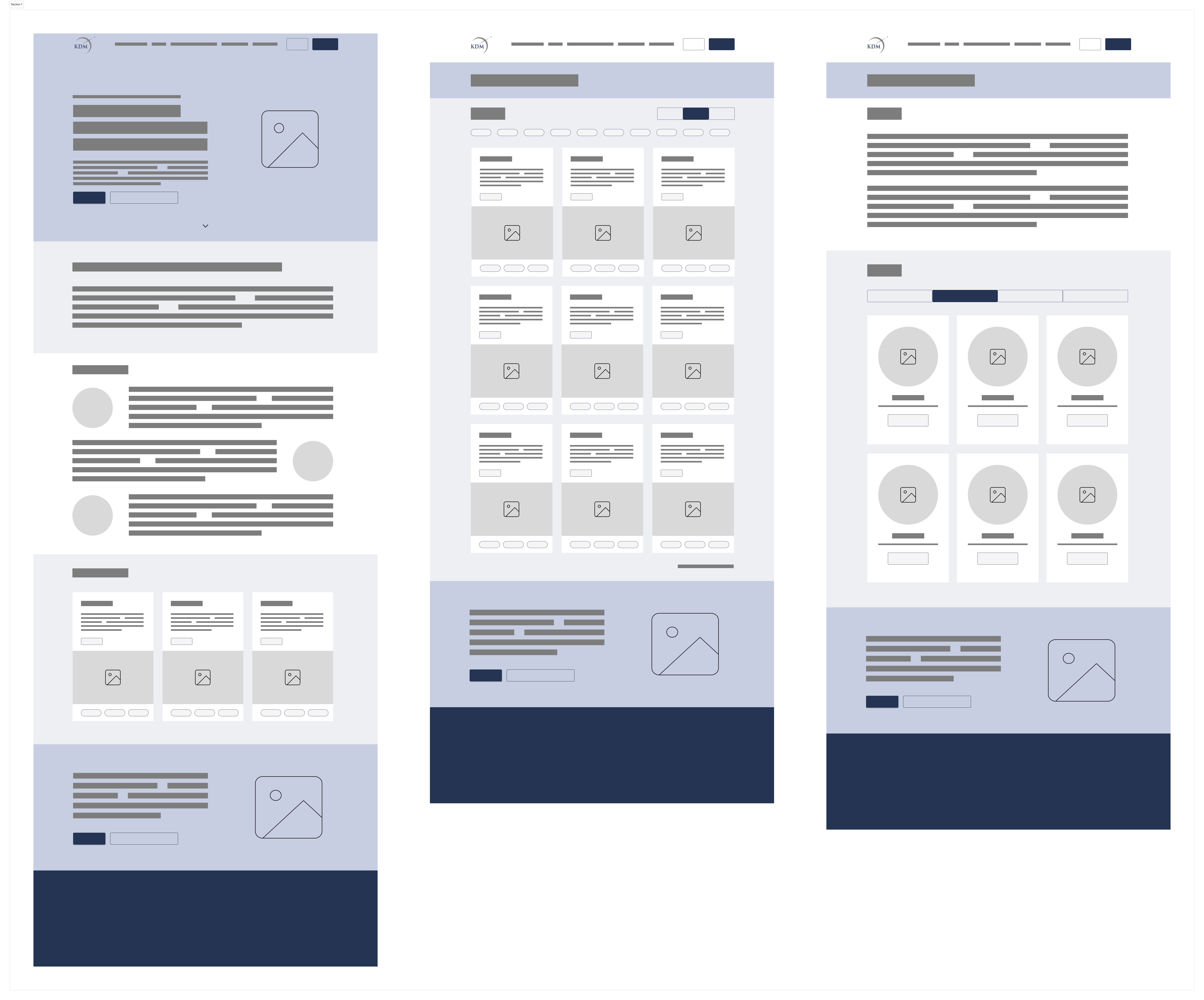
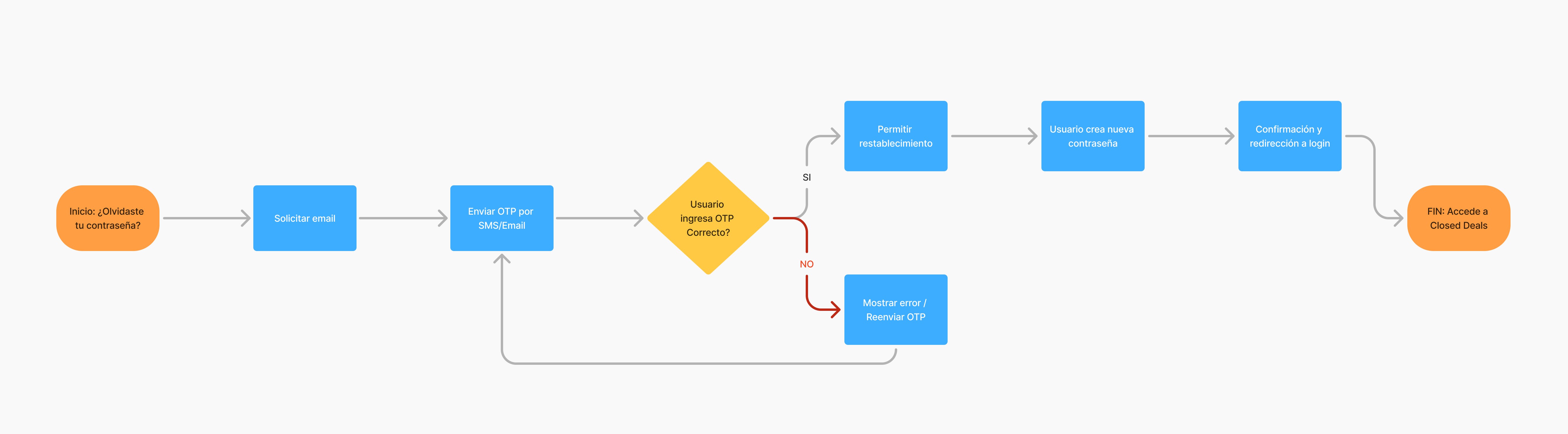
I designed the complete information architecture, a product conceptual map, and user flows for the primary journeys. I started with low-fidelity wireframes to validate structure and content before investing time in visual detail. I then evolved these into high-fidelity interactive prototypes for usability testing.

04.

Prototype: Structure Before Aesthetics

I designed the complete information architecture, a product conceptual map, and user flows for the primary journeys. I started with low-fidelity wireframes to validate structure and content before investing time in visual detail. I then evolved these into high-fidelity interactive prototypes for usability testing.

Information architecture
Conceptual map
User flow
Lo-fi wireframes
User flow
Lo-fi wireframes
Interactive prototype

05.

Test: Usability Testing with 4 Real Users

I conducted usability testing sessions with four actual investors. I assigned specific tasks within the prototype and observed where they struggled, where they hesitated, and their "think-aloud" feedback. This revealed three critical issues that were only visible through direct user observation.

05.

Test: Usability Testing with 4 Real Users

I conducted usability testing sessions with four actual investors. I assigned specific tasks within the prototype and observed where they struggled, where they hesitated, and their "think-aloud" feedback. This revealed three critical issues that were only visible through direct user observation.

Usability Test Findings & Design Decisions

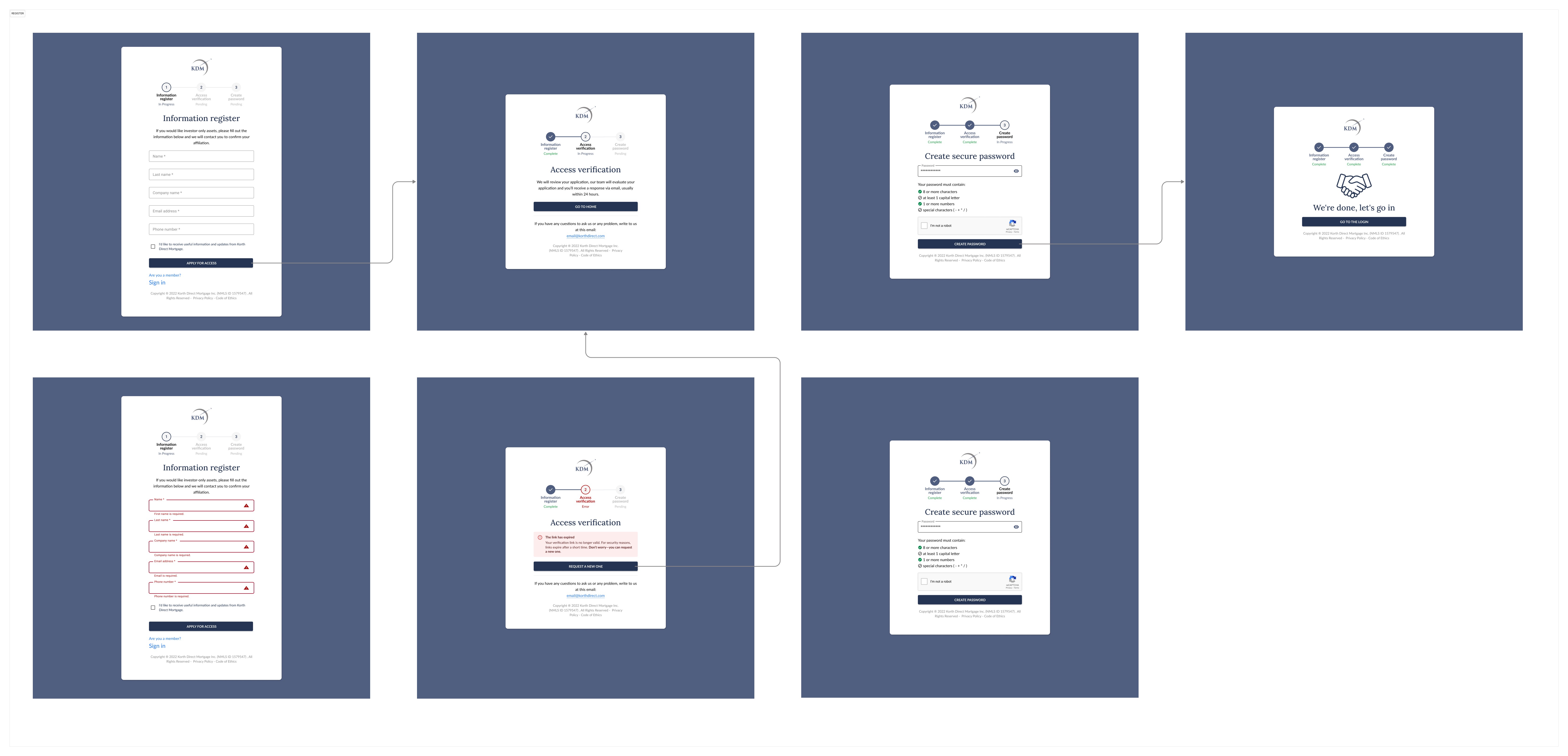
Finding 01 · Login and Registration

Access flows were inadequate and confusing.

Users did not understand what information was required or where they were in the process. Several abandoned the registration flow before completion. Error feedback was generic and failed to guide the user toward a fix.

Decision: I redesigned the login and registration flows into a step-by-step process with clear progress indicators, contextual error messages, and real-time validation. I documented the resulting wireflow for technical approval prior to implementation.
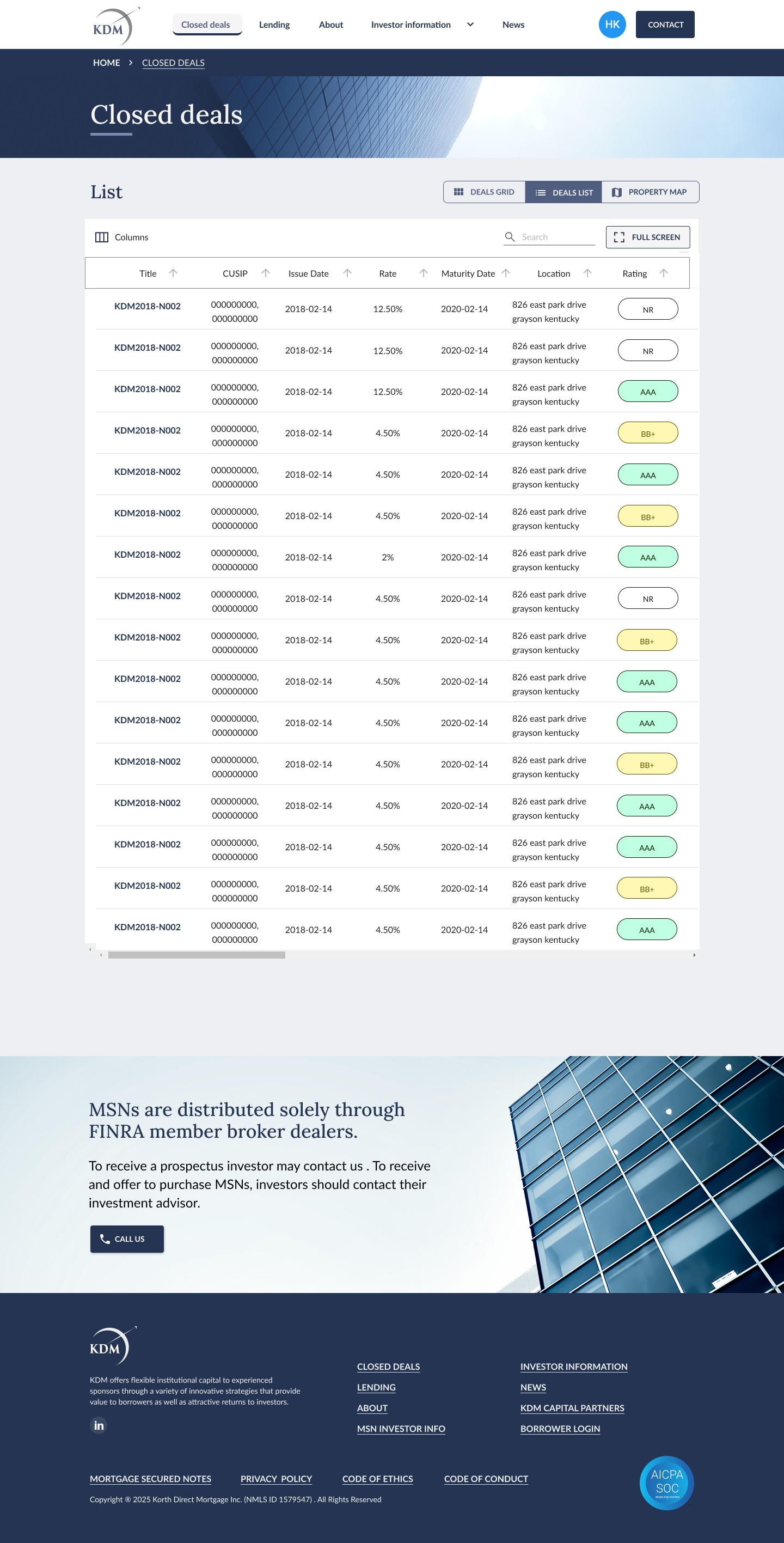
Finding 02 · Property Table

Data management was cumbersome and inefficient.

The original table presented excessive data without hierarchy. Users struggled to identify clickable areas to access property details, and process statuses (Under Review, Approved, Funded) were not visually distinct.

Decision: I reorganized the table by prioritizing high-value data, introduced visual status indicators using color-coded labels, and added a one-click detail view accessible from any row.
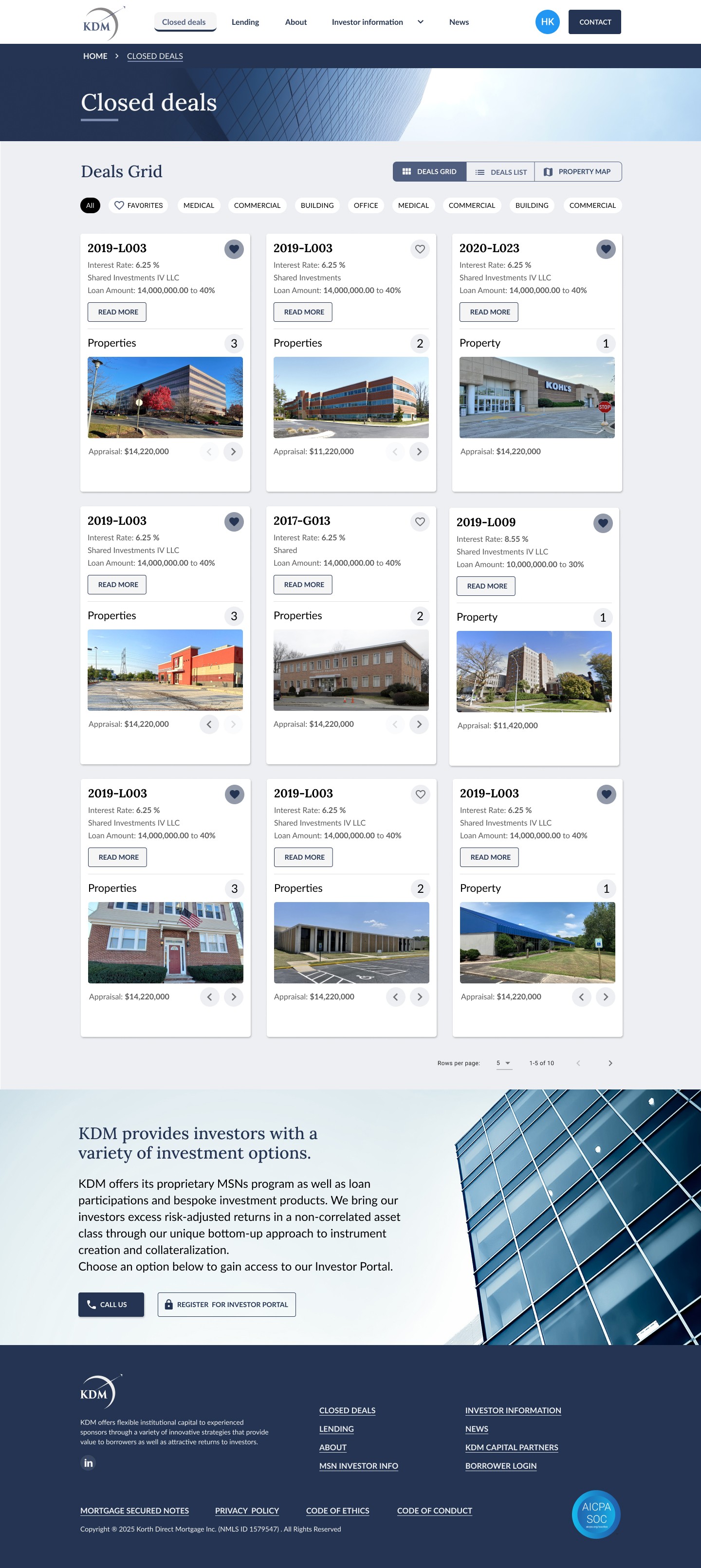
Finding 03 · Property Data Flow

Navigation within specific properties caused constant friction.

When managing financial data for a specific property, users became lost between sections, struggled to return to previous states, and performed redundant steps.

Decision: I redesigned the internal navigation architecture for property views using consistent breadcrumbs, a Button Group for the three primary property scenarios, and category filters using chips.
Before vs. After

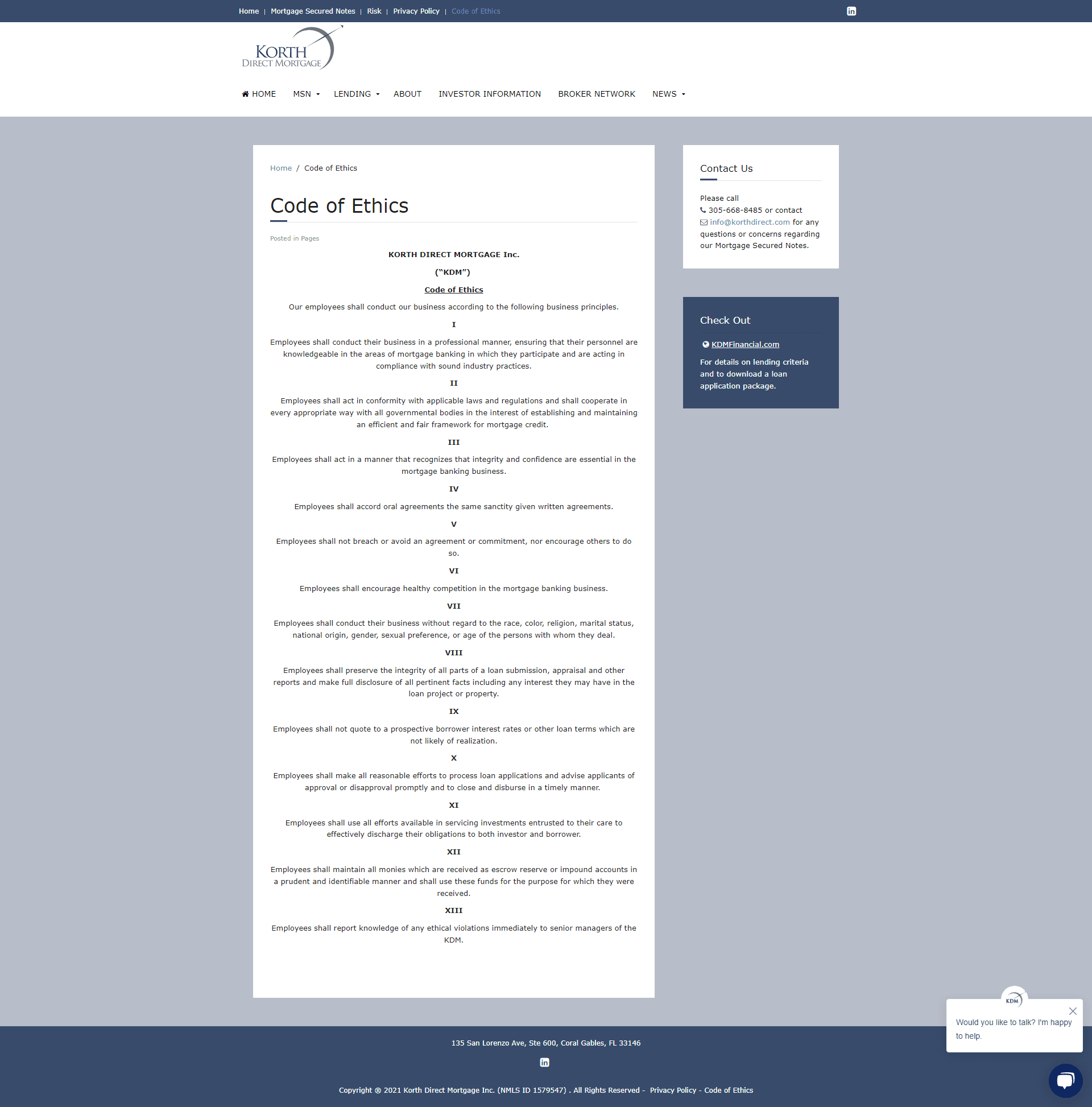
Before

  • Legacy Platform

  • Cluttered interface lacking hierarchy

  • Confusing navigation between sections

  • Invisible or unclear property statuses

  • Unguided login and registration

  • No responsive design

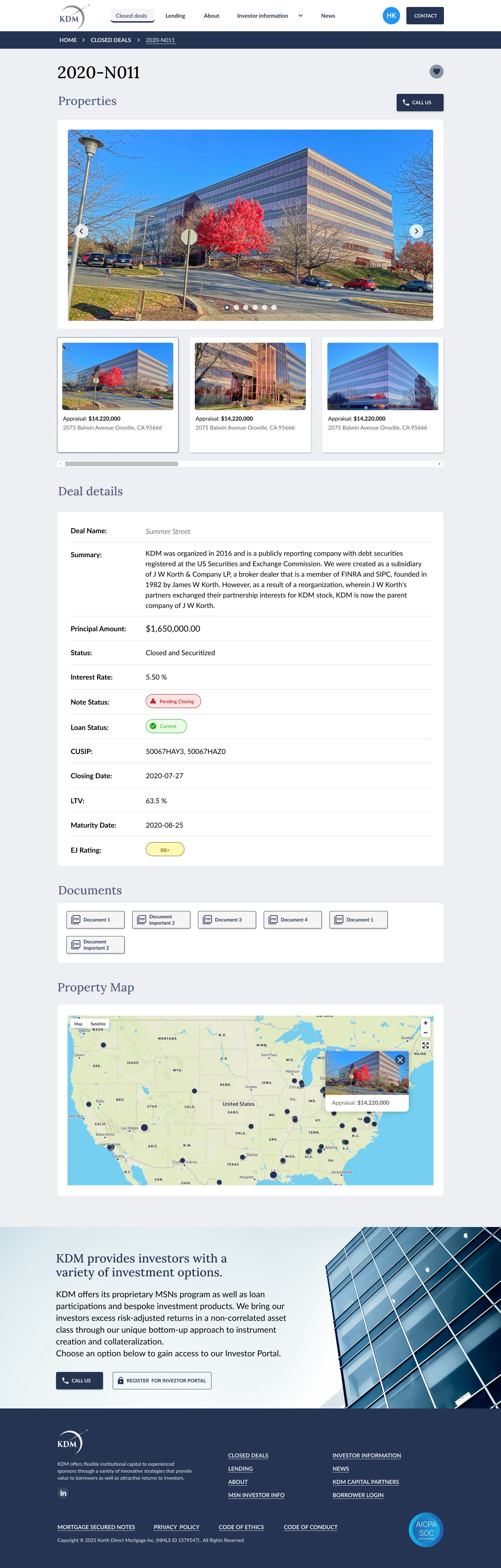
After

  • Redesigned Platform

  • Clean design with clear visual hierarchy

  • Clear information architecture

  • Statuses differentiated by color and label

  • Step-by-step guided access flows

  • Consistent responsive design

Results

At the close of the project, the platform’s ~100 active investors met the redesign with direct positive feedback to the client. By correcting the three critical flows identified in usability testing before implementation, I eliminated the most frequently reported friction points. The client expressed high satisfaction, and the development team implemented the components without further iterations thanks to the comprehensive design system documentation.

The business goal defined in the brief—a 30% increase in sales—was established as the primary tracking metric for the post-launch phase.

Takeaways

This project reinforced that usability testing is never a mere formality: the three most significant design breakthroughs did not emerge during initial analysis; they only surfaced when I put the prototype in front of real users. I also strengthened my focus on documentation—a robust design system was the key factor that allowed a three-person team to deliver on schedule.

I treat every project I take on as if it were my own. This means tough decisions, rigorous design criteria, and improvements you'll see in your product, your conversions, and your team's workflow. If this sounds like what you're looking for, let's talk.

© All rights reserved 2026 – Erick Rodriguez

I treat every project I take on as if it were my own. This means tough decisions, rigorous design criteria, and improvements you'll see in your product, your conversions, and your team's workflow. If this sounds like what you're looking for, let's talk.

© All rights reserved 2026 – Erick Rodriguez

I treat every project I take on as if it were my own. This means tough decisions, rigorous design criteria, and improvements you'll see in your product, your conversions, and your team's workflow. If this sounds like what you're looking for, let's talk.

© All rights reserved 2026 – Erick Rodriguez